SCHOOL OF SEEING: THE CITY

A new exhibition at the Old Masters Gallery!
INFO
Place
Herbst Palace Museum, a branch of the Muzeum Sztuki in Łódź, 72 Przędzalniana Street
Time
from June 18, 2026, to December 31, 2026
curator
Katarzyna Kończal
architecture, graphic design
Grafixpol
exhibition coordination
Ewelina Strynowicz
editorial coordination
Izabela Wojtyczka
education
Tomasz Helbik, Joanna Jaśkiewicz, Katarzyna Kończal, Tatiana Szymańska
public program
Wanda Janakiewicz, Natalia Słaboń
communication
Anna Augustyn Kamińska, Dorota Wituła
conservation
Anita Andrzejczak, Naoko Kamoji, Małgorzata Kowalska, Tatiana Matwij, Ewelina Pawlak
gallery services
Krzysztof Francek, Andrzej Kacprzak, Marek Kubacki, Adam Maj, Adam Mąka, Tomasz Stawiński, Ireneusz Szymarek, Maciej Więcławski
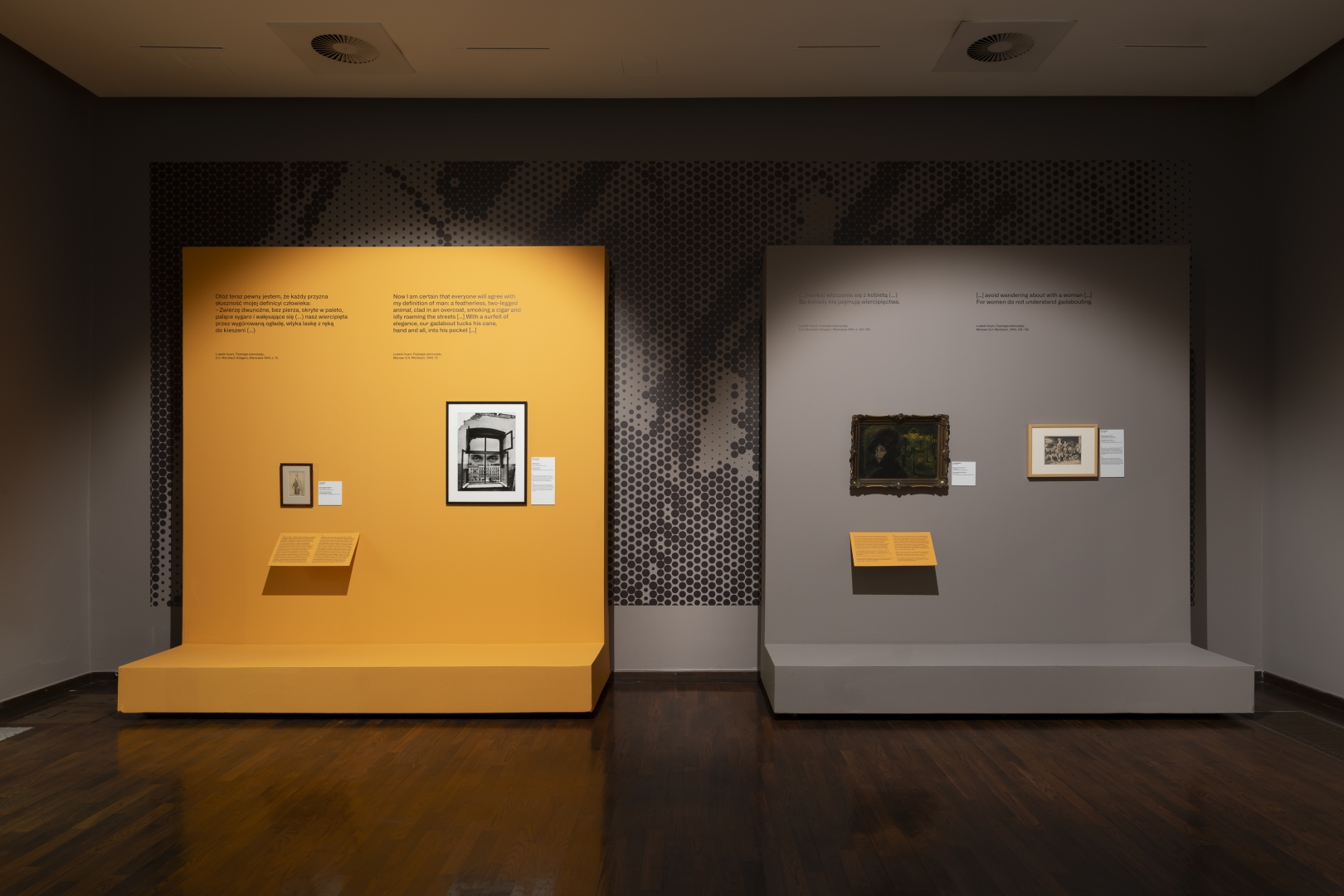
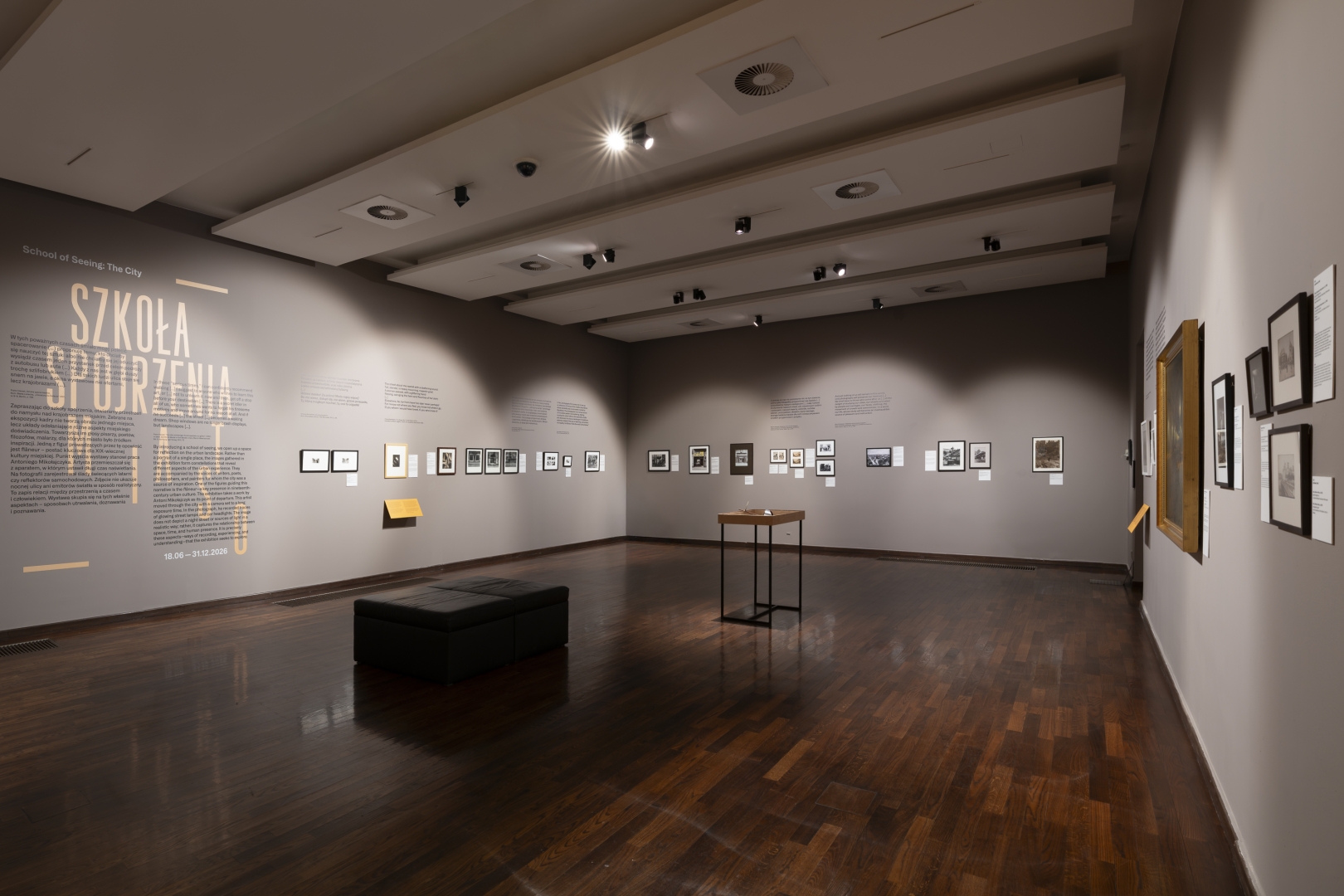
The exhibition School of Seeing: The City encourages visitors to walk, observe, and consider urban squares, streets, and backyards as if they were texts to be read. Through a dialogue between photography and words—from the second half of the 19th century to the present day—the show creates a space for reflection on the urban landscape. The starting point is a work by Antoni Mikołajczyk. The artist moved through the city with a camera set to a long exposure time, capturing traces of glowing street lamps and car headlights. The photograph does not depict a night street or sources of light in a realistic way. Instead, it records the relationship between space, time, and the human presence. These are precisely the aspects the exhibition focuses on—ways of recording, experiencing, and understanding.
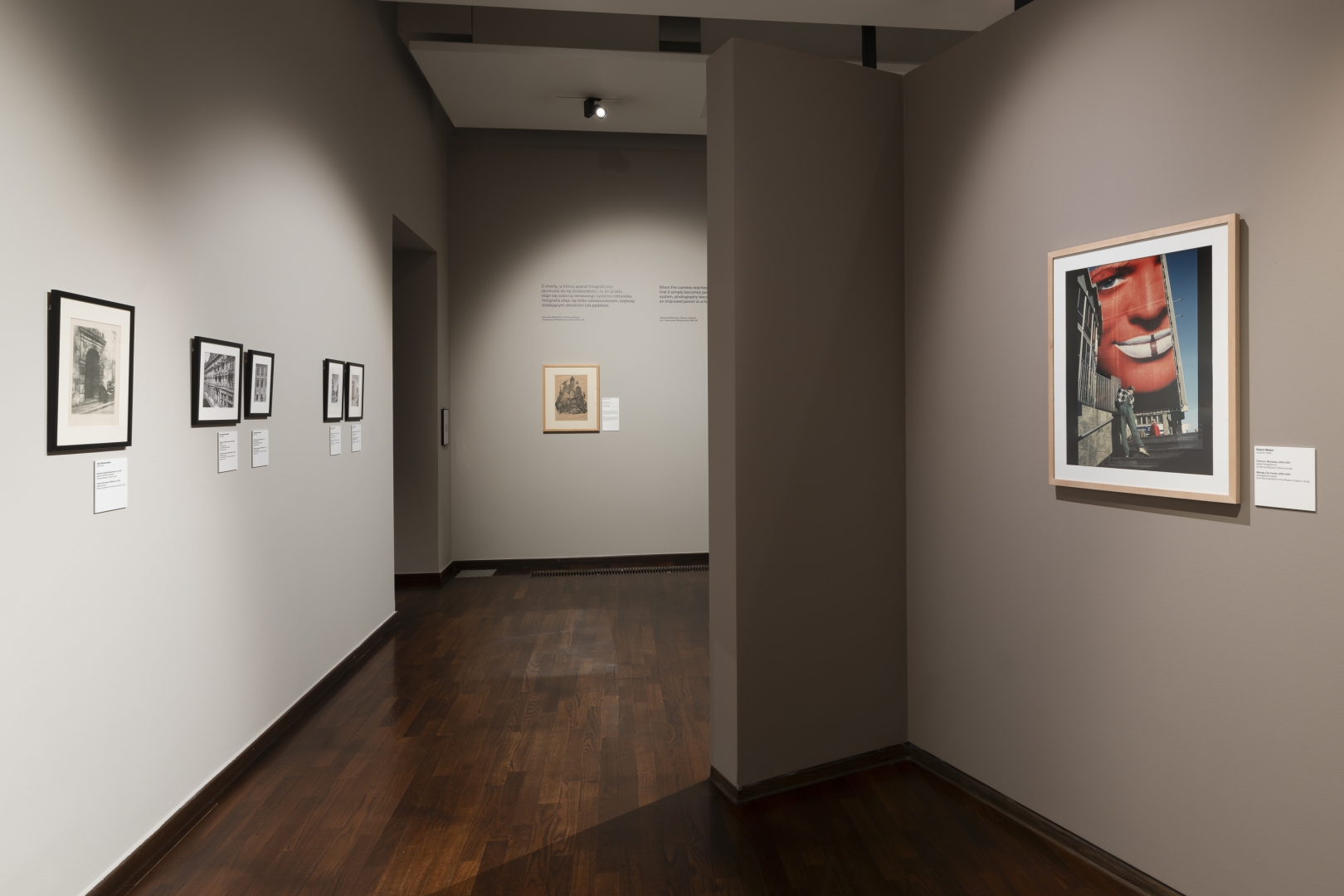
Photography is a medium that allows for the preservation of the ever-changing urban landscape. The images presented in the exhibition do not form a portrait of a single place, but rather constellations revealing various aspects of the urban experience. They are accompanied by the voices of writers, poets, philosophers, and painters for whom the city became a source of inspiration. One of the guiding figures in this narrative is the flâneur armed with a camera—an attentive observer who walks the streets, looks into windows, enters backyards, and records what is fleeting and vanishing. He examines new phenomena and processes, responding to them critically in order to understand them better. He reads the city. What seems mundane to others gains deeper meaning for him. Following Charles Baudelaire, the flâneur is compared to a “kaleidoscope endowed with consciousness.”
In his essay The Art of Walking, Franz Hessel—a writer and translator—writes that “Each of us is, deep down, a bit of a pavement-polisher, who from time to time wishes to forget the unpleasant reasons behind various movements and simply move without any reason at all. For such people, the street becomes a waking dream, and shop windows are no longer displays of goods but landscapes.” Hessel recommends, among other things, walking around one’s own neighborhood. In line with this suggestion, the exhibition also includes a section devoted to Łódź. The urban culture of the “promised land,” alongside the customs and art of the 19th and the turn of the 20th century, is the everyday focus of the Herbst Palace Museum, a branch of the Muzeum Sztuki in Łódź.
The exhibition features works by, among others, Karol Beyer, Janusz Maria Brzeski, Leopold Buczkowski, Jan Bułhak, Zofia Chomętowska, Władysław Grabowski, Stefan Kiełsznia, Roman Opałka, Włodzimierz Pfeiffer, Bruno Schulz, Piotr Tomczyk, and Aleksander Zakrzewski.
The photographs come from the collections of the Muzeum Sztuki in Łódź, as well as from the State Archive in Lodz, the Museum of Warsaw, the Archeology of Photography Foundation, the University of Lodz Library, the National Library of Poland, the Marshal Józef Piłsudski Provincial Public Library in Łódź, Museum of the City of Łódź, Museum of Photograhy in Krakow and The Museum of Warsaw.
Sponsorship:

Exhibition partner:

Partners:

Media patrons:

Cooperation:
Share the information
Załączniki
Galeria